
Creative camper route ideas for Chile 2026
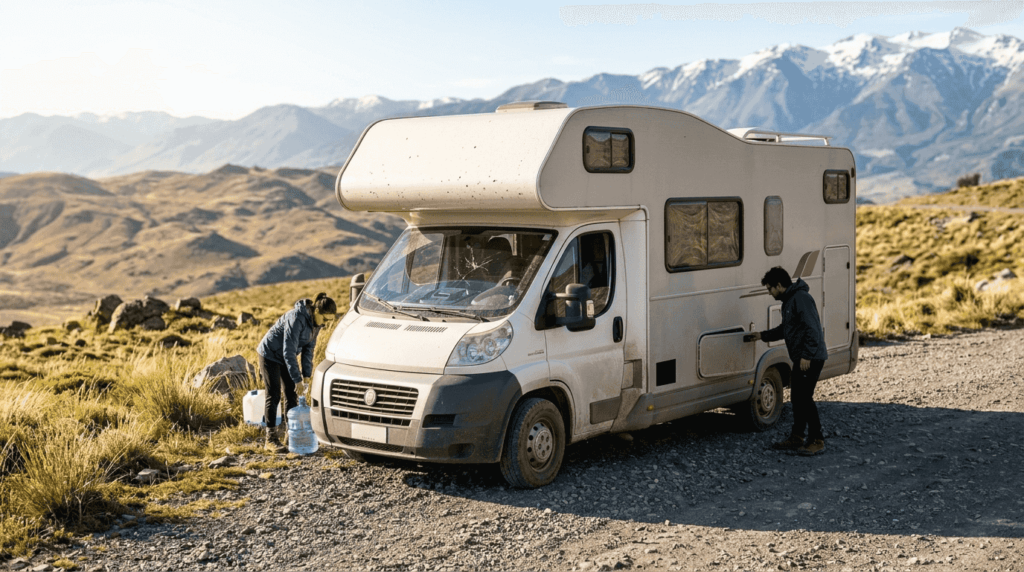
Chile offers more than 1,240 kilometers of the Carretera Austral and 756 registered campsites, making it an ideal destination for camper travelers seeking authentic adventure. The diversity of landscapes allows you to go from the desert to temperate forests in just a few hours, creating unique experiences. This article will guide you through essential criteria for choosing routes, iconic options like the Carretera Austral, creative alternatives in less-explored regions, and practical tips for preparing your vehicle. You will discover how to plan a memorable trip with the right information on terrain, campsites, and suitable vehicles.
Table of contents
- Criteria for choosing camper routes in Chile
- Exploring the Carretera Austral: An iconic route for 4×4 campers
- Other creative routes for camper travel in Chile
- How to choose and prepare your camper for adventure in Chile
- Discover and rent campers in Chile with Rollbnb
- Frequently asked questions about routes and campers in Chile
Key takeaways
| Point | Details |
|---|---|
| Landscape diversity | Chile combines deserts, mountains, lakes, and coastline over short distances, ideal for varied camper routes |
| Iconic Carretera Austral | A 1,240 km route with more than half unpaved; requires a 4×4 vehicle for maximum safety |
| Camping infrastructure | 756 registered campsites concentrated in Los Lagos, Biobío, and Aysén make planning easy |
| Adapted vehicles | 4×4 campers with heating and autonomy improve the experience on difficult terrain |
| Planning flexibility | Adjustable routes based on weather and available time maximize enjoyment and reduce stress |
Criteria for choosing camper routes in Chile
Selecting the right route transforms an ordinary trip into a memorable adventure. Chile presents unique challenges due to its extreme geography, from the arid Atacama to the Patagonian glaciers. Understanding key factors will allow you to make informed decisions and enjoy every mile.
Terrain diversity is the first fundamental criterion. Chile offers a wide variety of landscapes that can change in a few hours, from deserts to lakes and mountains. This variety requires evaluating the type of road you will face. Coastal routes usually have pavement in good condition, while roads toward national parks may feature gravel, steep slopes, and river crossings.
Your vehicle’s 4×4 capability determines which routes are accessible. Unpaved roads, common in southern and mountainous regions, require four-wheel drive to navigate mud, loose stones, and uneven slopes. A conventional camper will limit your options to main highways, while a 4×4 opens doors to remote destinations and authentic experiences.
Camping availability directly influences your itinerary. Regions with a high concentration of official campsites offer greater comfort and services like showers, electricity, and drinking water. Less developed areas require greater self-sufficiency and additional gear. Researching campsite locations beforehand helps you calculate reasonable daily distances.
Pro tip: Plan with flexibility by including buffer days between main destinations. Patagonian weather can change quickly, temporarily closing roads. This flexibility allows you to adjust without missing out on key experiences.
Season and weather are decisive factors. The southern summer (December to March) offers the best conditions for most routes, with long days and moderate temperatures. Winter limits access to mountainous areas due to snow but reduces crowds. Also, consider camper pickup and drop-off. Platforms like Rollbnb facilitate flexible arrangements that optimize your route without unnecessary backtracking.
Key factors when choosing a route:
- Terrain type: pavement, gravel, mountain roads
- Vehicle capability: 2WD for main routes, 4×4 for full adventure
- Campsite density: high in tourist regions, low in remote areas
- Season: summer for full access, winter for solitude
- Pickup logistics: flexible points reduce wasted time
Exploring the Carretera Austral: An iconic route for 4×4 campers
The Carretera Austral represents every camper adventurer’s dream. This legendary route crosses the Chilean Patagonia, offering landscapes that defy the imagination. Preparing properly makes the difference between an epic adventure and a problematic trip.
The Carretera Austral is 1,240 km long and more than half is unpaved, ideal for 4×4 camper trips. The stretch between Puerto Montt and Villa O’Higgins combines asphalt, compacted gravel, and uneven sections that demand constant attention. 4×4 traction isn’t optional; it’s necessary to navigate muddy sections after rain and steep slopes near border crossings.
The route offers access to very diverse natural landscapes and well-equipped private campsites. Hanging glaciers, ancient larch forests, turquoise lakes, and fjords create an incomparable visual mosaic. Every curve reveals new perspectives, from Pumalín Park to the Northern Ice Field.
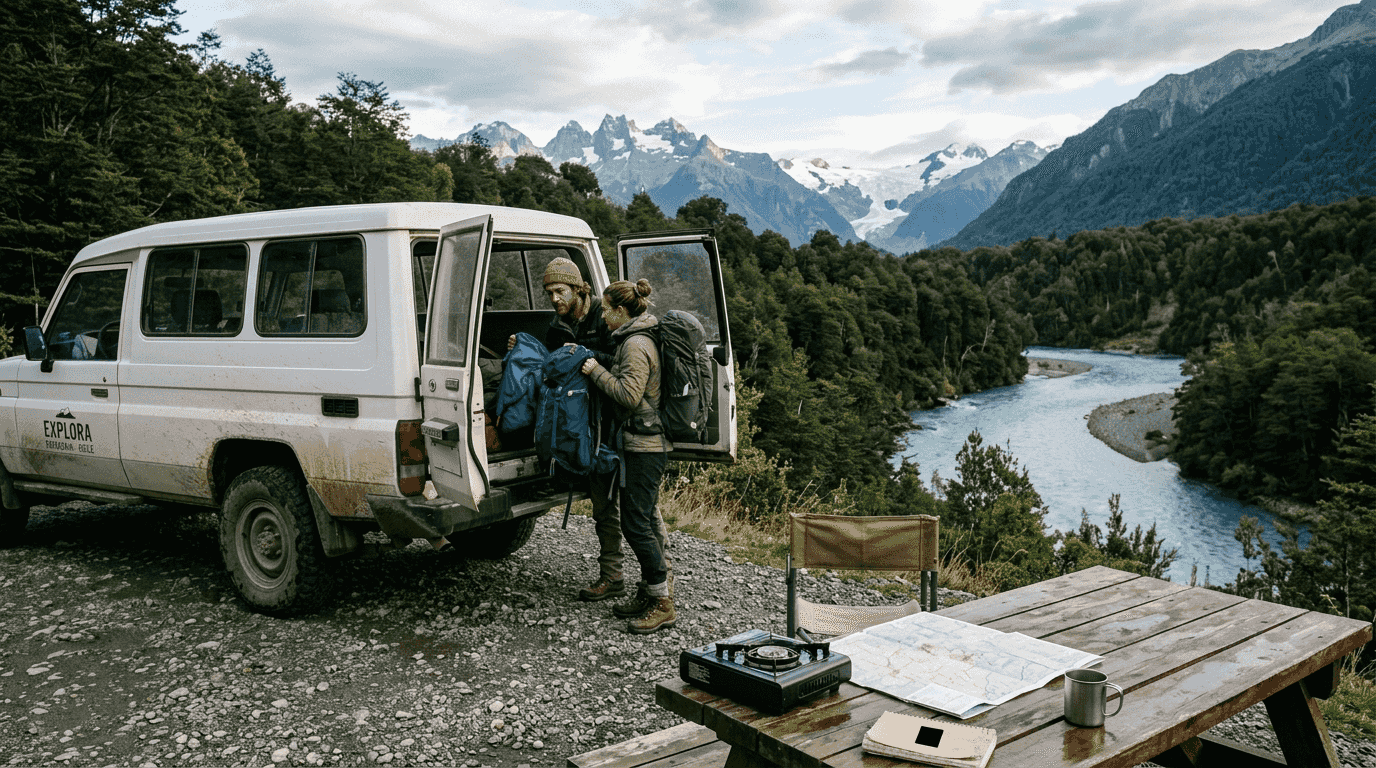
Pro tip: Carry extra spare tires and a full repair kit. Punctures are common on gravel, and distances between workshops can exceed 200 kilometers. Basic mechanical self-sufficiency saves you from major setbacks.
The ideal season spans December to March, when most campsites are operating and roads are in better condition. January and February see the highest tourist influx, raising prices and reducing availability. November and March offer a balance between favorable weather and less congestion.
Suggested basic 10-day itinerary:
- Days 1-2: Puerto Montt to Puyuhuapi, camping in Queulat
- Days 3-4: Puyuhuapi to Coyhaique, urban exploration and supplies
- Days 5-6: Coyhaique to Puerto Tranquilo, Marble Caves
- Days 7-8: Puerto Tranquilo to Cochrane, General Carrera Lake
- Days 9-10: Cochrane to Villa O’Higgins, gradual return
| Stretch | Distance | Road type | Main attractions |
|---|---|---|---|
| Puerto Montt – Chaitén | 220 km | Mixed (50% pavement) | Pumalín Park, hot springs |
| Chaitén – Coyhaique | 420 km | Mostly gravel | Hanging Glacier, Puyuhuapi |
| Coyhaique – Puerto Tranquilo | 220 km | Compacted gravel | General Carrera Lake, Caves |
| Puerto Tranquilo – Villa O’Higgins | 380 km | Uneven gravel | O’Higgins Glacier, remote landscapes |
The 4×4 campers available in Chile are designed specifically for these conditions. Reinforced suspension, underbody protection, and all-terrain tires are standard features. Many include diesel heating systems, essential for cold Patagonian nights that can drop to 5 degrees even in summer.
Plan strategic stops for supplies. Coyhaique is the main hub with full supermarkets and reliable service stations. Between large towns, distances can reach 150 kilometers without services. Carry reserves of fuel, water, and non-perishable food.
The experiences documented in travel blogs from previous travelers reveal invaluable practical details: the best hidden campsites, the most challenging road sections, and optimal timing for ferry crossings. This crowdsourced information complements official guides with real perspectives.
Other creative routes for camper travel in Chile
Beyond the Carretera Austral, Chile hides alternative routes that combine accessibility with authentic adventure. These options allow for memorable experiences without the extreme demands of deep Patagonia.
The Los Lagos Region concentrates volcanic landscapes, crystal-clear lakes, and the Pacific coast within manageable distances. Chile has 756 registered campsites, with a large concentration in Los Lagos, Biobío, and Aysén, ideal for camper routes. This infrastructure facilitates flexible itineraries without sacrificing comfort.
Lakes and Volcanoes Route (7 days):
- Puerto Varas as a base, exploring Lake Llanquihue
- Ascent to Osorno Volcano with panoramic views
- Crossing to Chiloé for local culture and stilt houses
- Camping in Alerce Andino National Park
- Circuit around Todos los Santos Lake
The Biobío Region offers mountains, native forests, and authentic Mapuche culture. Less-traveled routes allow for a deep connection with local communities. Roads are mostly paved, accessible for 2WD campers, although stretches toward remote hot springs benefit from 4×4.
Cultural Biobío Route (5 days):
- Concepción to Los Ángeles, visit to Salto del Laja
- Exploration of Laguna del Laja National Park
- Ralco and Pehuenche communities
- Natural hot springs in Malalcahuello
- Return through Ñuble National Reserve
Pro tip: Combine regions in a single trip by taking advantage of their proximity. A 14-day circuit can integrate Los Lagos and Biobío, maximizing the diversity of experiences without exhausting distances between points.
The compact camper vans are ideal for routes in regions with better infrastructure. Greater maneuverability in small towns and efficient fuel consumption compensate for lower off-road capability. For couples or solo travelers, these options offer a perfect balance.
| Route | Difficulty | Services | Unique attractions |
|---|---|---|---|
| Lakes and Volcanoes | Low | Abundant | Active volcanoes, lakes, Chilote culture |
| Cultural Biobío | Medium | Moderate | Mapuche communities, hot springs, native forests |
| Carretera Austral | High | Limited | Glaciers, fjords, virgin nature |
Considerations for combining regions:
- Calculate 300-400 km daily maximum to enjoy without rushing
- Book campsites in high season (January-February) in advance
- Alternate intense driving days with local exploration days
- Check road conditions in winter for mountain routes
- Include rest days in cities for supplies and laundry
These alternative routes demonstrate that camper adventure doesn’t always require Patagonian extremes. Chile’s geographic diversity allows for rich experiences in any region, adapted to your experience level and available time.
How to choose and prepare your camper for adventure in Chile
The right vehicle transforms limitations into possibilities. Choosing and preparing your camper properly ensures comfort, safety, and the ability to face the unique challenges of Chilean territory.
Essential features for Chilean terrain:
- 4×4 traction for unpaved roads and slopes
- Minimum ground clearance of 20 cm to navigate obstacles
- Independent heating system for cold nights
- Water tanks with a minimum capacity of 80 liters
- Auxiliary batteries for 3-4 days of electrical autonomy
- Gas stove and efficient refrigerator
4×4 vehicles with different configurations and excellent amenities receive positive ratings in user reviews. Hot water, internal showers, and diesel heating systems make a significant difference in comfort, especially in southern regions where night temperatures drop drastically.
Preparation before departing:
- Full mechanical inspection: brakes, suspension, tires, and fluids
- Verification of electrical systems: batteries, solar panels, inverters
- Equipment test: stove, heating, water pump
- Gas load: carry spare cylinders if you plan to visit remote areas
- Water supply: fill tanks before leaving cities
- Storage organization: distribute weight evenly
Pro tip: Create a digital checklist shared with your travel partner. Include specific items by category: kitchen, clothing, tools, first aid, documents. Review it 48 hours before departing to avoid last-minute oversights.
Essential packing checklist:
- Basic tools: wrenches, screwdrivers, pliers, duct tape
- Full first aid kit with personal medications
- Flashlights, spare batteries, and solar chargers
- Ropes, extra stakes, and waterproof tarp
- Physical maps as a GPS backup in areas without signal
- Heavy-duty trash bags for the leave-no-trace principle
- Collapsible jugs for extra water
- Snow chains if traveling in the winter season
Specialized 4×4 campers available on rental platforms include base equipment, but customizing according to your route improves the experience. For the Carretera Austral, prioritize extended fuel capacity and additional underbody protection. For coastal routes, focus on internal comfort and beach gear.
Maximize safety and comfort:
- Communicate your itinerary to trusted contacts with estimated dates
- Download offline maps of your entire planned route
- Carry a high-capacity power bank for emergencies
- Invest in a good sleeping bag rated for sub-zero temperatures
- Install thermal curtains to retain night heat
- Use hanging organizers to maximize interior space
Meticulous preparation eliminates stressful improvisation. Every hour invested in planning translates into days of smooth travel, allowing you to focus on enjoying the scenery instead of solving avoidable problems.
Discover and rent campers in Chile with Rollbnb
Turning these ideas into reality requires the right vehicle and the right platform to find it. Rollbnb connects adventurers with camper owners throughout Chile, simplifying the rental process and maximizing options.
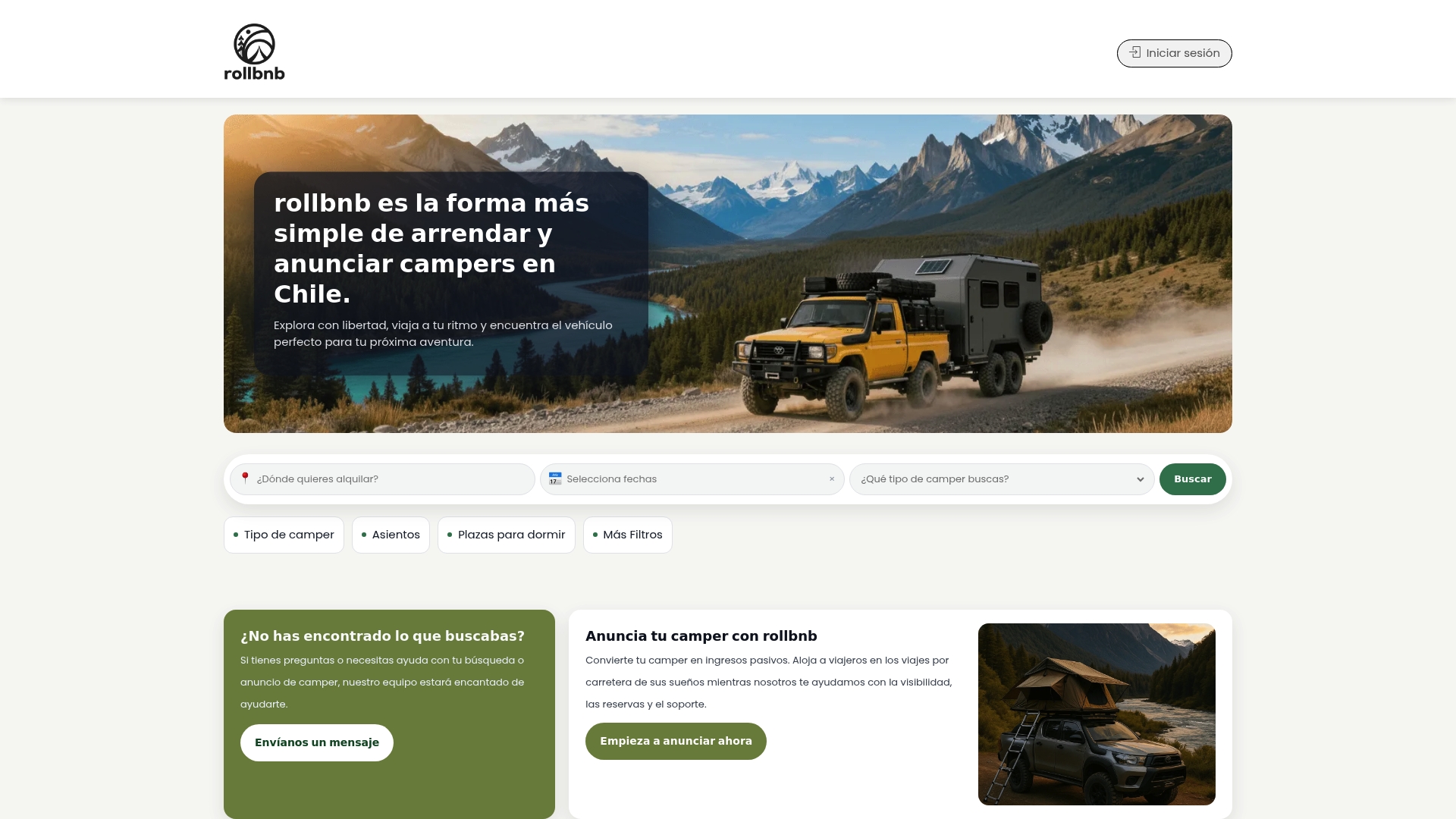
The platform for renting and sharing campers offers a variety from compact vans to fully equipped 4×4 motorhomes. Filters by passenger capacity, specific features, and location allow you to find the perfect match for your planned route. Each listing includes detailed photos, technical specifications, and reviews from previous travelers.
Flexibility in pickup and drop-off facilitates one-way routes, eliminating unnecessary backtracking. Imagine picking up your camper in Puerto Montt, traveling the Carretera Austral, and returning it in Coyhaique, optimizing every mile of your adventure. This smart logistics translates into more time exploring and less time driving repeated stretches.
Listed vehicles undergo verifications by owners committed to maintaining high standards. Functional heating systems, equipped kitchens, and batteries in good condition are basic expectations, not luxuries. Customer support resolves doubts about preparation, recommended routes, and best practices for each type of vehicle.
Specialized camper rental options include configurations for different needs: families, couples, groups of friends, or solo travelers. Some owners offer additional equipment like kayaks, bicycles, or fishing gear, expanding the possibilities for activities at your destination.
The user community shares experiences, tips, and proven routes on the most complete campervan sharing portal in South America. This collective knowledge network accelerates your learning curve, allowing you to benefit from the mistakes and successes of those who have already traveled the roads you plan to explore.
Frequently asked questions about routes and campers in Chile
When is the best season to travel the Carretera Austral?
December to March offers the best weather conditions with long days and moderate temperatures between 10-20 degrees. January and February see the highest tourist influx, while November and March balance favorable weather with less congestion and more affordable prices.
What type of camper is recommended for routes with unpaved roads?
4×4 vehicles with a minimum ground clearance of 20 cm and reinforced suspension are essential for gravel and uneven roads. Four-wheel drive allows you to navigate mud, steep slopes, and minor river crossings without compromising safety.
How many official campsites are there and where are they concentrated?
Chile has 756 registered campsites, concentrated mainly in the Los Lagos, Biobío, and Aysén regions. This distribution facilitates route planning with reliable infrastructure, although remote areas require greater self-sufficiency.
What do I do if I need to return the camper in another location?
Platforms like Rollbnb facilitate pickup and drop-off arrangements in different locations through coordination with owners. This flexibility allows for optimized one-way routes, eliminating backtracking and maximizing exploration time.
Is it safe to camp in remote areas of Chile?
Chile is generally safe for camping, but remote areas require proper preparation. Communicate your itinerary, carry offline maps, emergency gear, and sufficient provisions. Respect national park signage and check weather conditions before heading into isolated areas.
Do I need previous experience to drive a camper on the Carretera Austral?
Basic experience with large vehicles and driving on gravel is recommended but not mandatory. Practice on dirt roads near your starting point before facing more challenging sections. Drive slowly, maintain a safe distance, and adapt your speed to the road conditions.