
Camper Booking Technology in Chile 2026: 65% Mobile
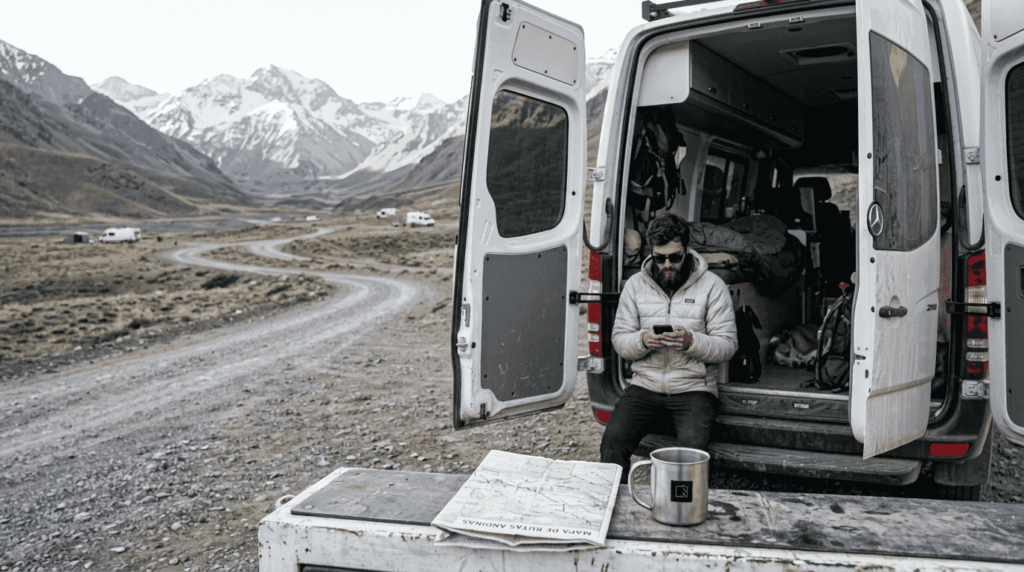
Booking a camper in Chile used to involve long phone calls, unanswered emails, and little clarity on actual availability. Today, 65% of travel bookings are made from mobile devices, radically transforming how adventurous travelers plan their getaways. Technology not only simplifies the booking process but also enhances the safety, flexibility, and overall camper travel experience. This article explores the innovations revolutionizing camper bookings in Chile during 2026, from artificial intelligence to essential offline applications for remote areas.
Table of Contents
- How Artificial Intelligence Optimizes Camper Bookings in Chile
- Mobile Apps and Offline Features for Camper Travelers
- Blockchain and Security in Camper Bookings: Potential and Challenges
- Mobile Design Trends and Regulation for Camper Booking Platforms in Chile
- Enjoy the Camper Experience with Rollbnb Technology
- Frequently Asked Questions
Key takeaways
| Point | Details |
|---|---|
| Massive Mobile Adoption | 65% of travel bookings are made from mobile phones, facilitating flexible and fast access |
| Critical Offline Tools | Apps with downloadable maps are essential in remote areas of Chile with limited coverage |
| AI Optimizes Experience | Chatbots and personalized recommendations improve efficiency and reduce response times |
| Blockchain in Development | Promises greater security and transparency but faces speed and adoption challenges |
| Regulation and Mobile Design | Privacy compliance and responsive design are fundamental for user trust |
How Artificial Intelligence Optimizes Camper Bookings in Chile
Artificial intelligence is transforming how travelers search for and book campers in Chile. This technology is not just a futuristic concept but an applied reality that improves operational efficiency and user experience on booking platforms.
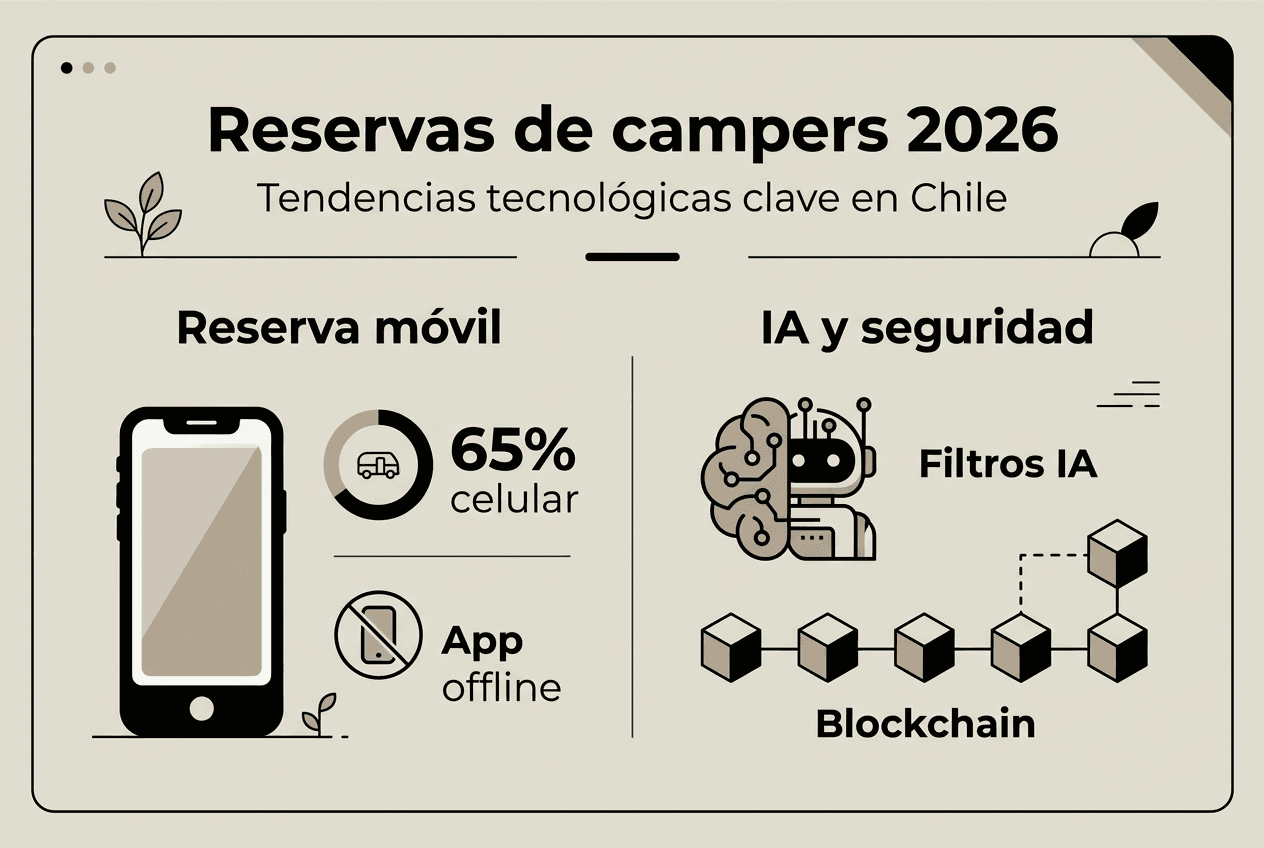
80% of users check real-time availability before confirming a booking. AI systems respond to these inquiries instantly, eliminating the frustration of waiting for manual responses. The integration of AI-powered chatbots improves efficiency by addressing common queries without human intervention, allowing teams to focus on complex cases.
AI-powered chatbots offer multiple advantages for those looking for how to rent a campervan in Chile:
- Immediate response to questions about availability, prices, and vehicle features
- 24/7 service without relying on traditional office hours
- Reduction of human errors in booking management and confirmations
- Ability to handle multiple inquiries simultaneously during peak season
Personalization is another key benefit of AI. Algorithms analyze previous preferences, favorite destinations, and search patterns to recommend specific options. If a user frequently searches for campers that can accommodate four people and have trekking equipment, the system learns and prioritizes these features in future searches.
Pro tip: When using platforms with integrated AI, take advantage of advanced filters and personalized recommendations to save time. Technology can identify options you might manually overlook.
Tomas Collados, CEO of Glampi, highlights in his interview with La Tercera the importance of implementing AI that generates real value for the user, not just automation for automation’s sake. The key is to design systems that truly understand the adventurous traveler’s needs and facilitate informed decisions.
AI also optimizes inventory management for camper owners. It predicts periods of high demand based on historical data and search trends, allowing for strategic price and availability adjustments. This benefits both renters and travelers, creating a more efficient and transparent market.
Mobile Apps and Offline Features for Camper Travelers
Chile’s diverse geography presents a unique challenge: many of the most spectacular routes pass through areas with limited or no cellular coverage. This is where mobile applications with offline functionalities become indispensable tools for traveler safety and autonomy.
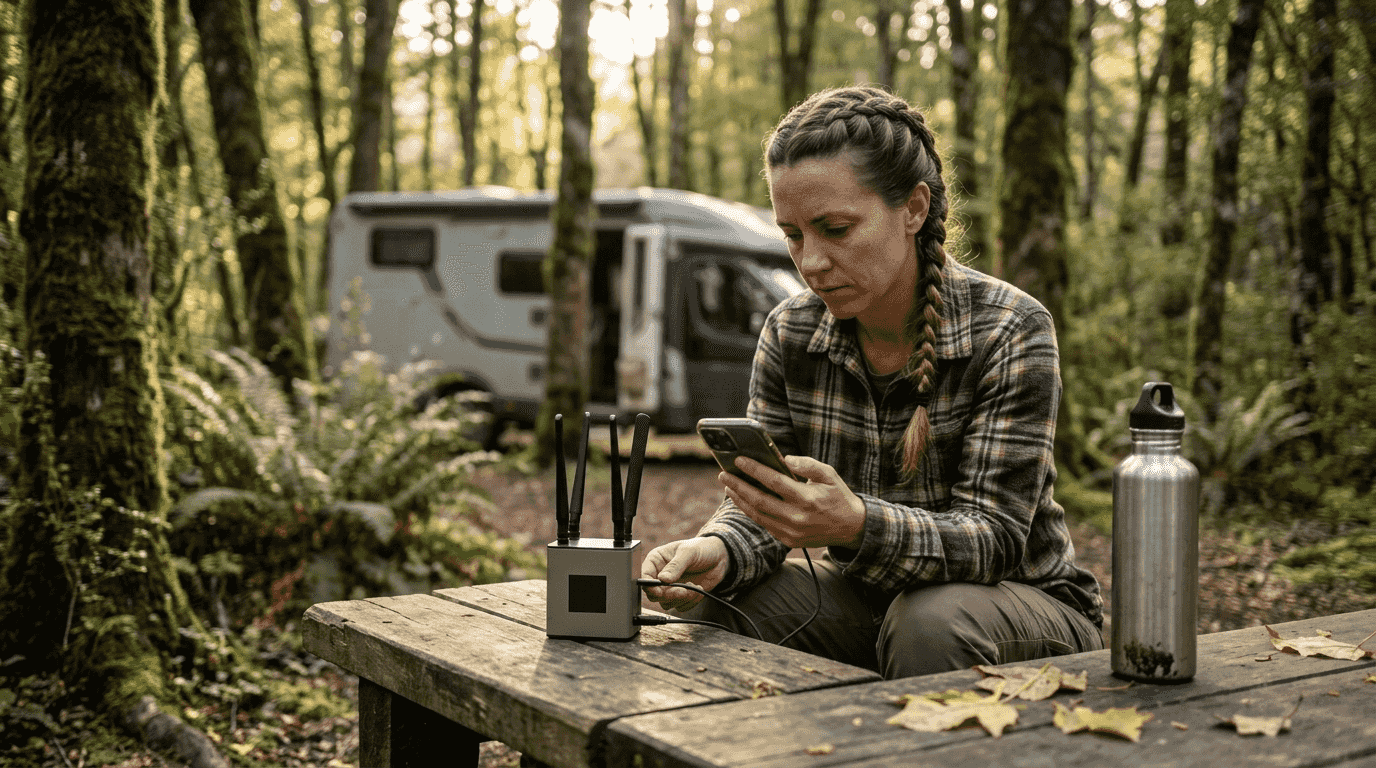
Apps like Maps.me allow you to download offline maps, crucial in areas without cellular coverage. This capability transforms a smartphone into a functional GPS even in the most remote Patagonia or the Atacama Desert.
The most recommended apps for camper travelers include:
- Maps.me: detailed offline navigation with community-marked points of interest
- iOverlander: collaborative database of campsites, parking, and services for campers
- Windy: detailed weather forecasts with visual wind and precipitation maps
- Park4Night: verified overnight locations with ratings from other users
These tools offer concrete advantages that go beyond simple navigation. They provide access to information verified by other travelers, creating an invaluable network of shared knowledge. The global camper community constantly contributes updates on road conditions, water availability, and camping area safety.
To maximize the use of these apps during your trip, follow these steps:
- Download apps and create accounts before leaving urban areas with stable WiFi
- Identify your planned route and download offline maps for all regions you will visit
- Mark specific points of interest such as gas stations, supermarkets, and health centers
- Update apps regularly to access the latest community information
- Contribute your own experiences and findings to help future travelers
Experienced users agree on the importance of these tools:
“Offline apps are not a luxury; they are an absolute necessity. On the Carretera Austral, we lost signal for three consecutive days, but thanks to downloaded maps, we were able to navigate without problems and find incredible campsites not listed in traditional guides.”
The combination of mobile technology and offline functionality allows you to explore creative camper route ideas for Chile 2026 with confidence. Understanding the advantages of camper travel in Chile 2026 includes comprehending how technology expands adventure possibilities without compromising safety.
Integrating these apps for trailer camping into your planning transforms the travel experience. They not only provide practical information but also connect travelers with a global community that shares a passion for adventure and respect for nature.
Blockchain and Security in Camper Bookings: Potential and Challenges
Blockchain represents an emerging technology with significant potential to revolutionize trust and transparency in camper bookings. Although its adoption is still limited, understanding its benefits and limitations helps anticipate the future of the sector.
Blockchain is essentially a distributed digital ledger where transactions are recorded permanently and immutably. Applied to camper bookings, each transaction is registered on multiple network nodes, making fraudulent alteration of data practically impossible.
The comparison between traditional systems and blockchain reveals important differences:
| Feature | Traditional System | Blockchain |
| — | — |
| Data Security | Centralized, vulnerable to hacks | Distributed, highly resilient |
| Transparency | Limited, controlled by platform | Total, verifiable by all parties |
| Transaction Speed | Fast, immediate processing | Variable, can be slower |
| Operational Costs | Moderate, centralized infrastructure | Potentially lower in the long term |
| Record Modification | Possible with administrative access | Practically impossible |
Pilot projects with blockchain reduce fraud by 90% but face challenges in speed and adoption. This impressive statistic shows the transformative potential, although practical implementation faces technical and cultural obstacles.
Specific benefits of blockchain for camper bookings include:
- Elimination of unnecessary intermediaries, reducing commissions and costs
- Immutable records of vehicle history, maintenance, and ratings
- Smart contracts that automatically execute agreed terms without manual intervention
- Greater trust between renters and lessees through transparent verification
However, current limitations cannot be ignored. The transaction processing speed in many blockchain networks is considerably slower than traditional centralized systems. During periods of high demand, this could frustrate users accustomed to instant confirmations.
Low adoption among average users represents another significant challenge. Most travelers are unfamiliar with digital wallets, private keys, or fundamental blockchain concepts. The learning curve can discourage the mass adoption necessary for the technology to reach its full potential.
Pro tip: If you are exploring the Rollbnb campervan listing, consider platforms that experiment with emerging technologies like blockchain. Although not yet mainstream, familiarizing yourself with these innovations puts you at an advantage for the future.
The blockchain study in camper bookings suggests that mass adoption requires more user-friendly interfaces that hide technical complexity. Users don’t need to understand how blockchain works internally, only to experience its security and transparency benefits.
The evolution of this technology during 2026 will be crucial in determining whether blockchain becomes an industry standard or remains a niche solution for specific cases requiring maximum security and transparency.
Mobile Design Trends and Regulation for Camper Booking Platforms in Chile
Mobile design and regulatory compliance are two fundamental pillars that determine the success of camper booking platforms in 2026. Both aspects directly impact user trust and business operational viability.
65% of bookings are made from mobile devices, highlighting the need for responsive design. This statistic is not just an interesting fact but a business imperative. Platforms that do not prioritize the mobile experience are literally losing two-thirds of their potential market.
Key mobile design trends for 2026 include:
- Minimalist interfaces with intuitive navigation and ultra-fast loading times
- Improved visual search with smart filters that learn from user behavior
- Augmented reality integration to visualize campers before booking
- Simplified checkout with native mobile payment options like Apple Pay and Google Pay
The importance of platforms working perfectly on cell phones and tablets goes beyond convenience. Travelers frequently make spontaneous searches while commuting, in cafes, or while planning routes. A poor mobile experience means lost bookings and frustrated users migrating to competitors.
Regarding regulation, regulations like GDPR affect data management on booking sites, with potential severe penalties. Although GDPR is European, it sets global standards that influence local legislation and user expectations.
Camper booking platforms in Chile must consider:
- Obtaining explicit consent before collecting users’ personal data
- Full transparency on what data is collected, how it is used, and with whom it is shared
- Implementing robust technical measures to protect sensitive information
- User’s right to access, correct, or delete their personal data upon request
- Mandatory notification of security breaches within established deadlines
Non-compliance with these regulations can result in devastating financial penalties and, more importantly, irreparable loss of user trust. In a market where reputation is fundamental, a privacy scandal can destroy years of brand building.
Pro tip: When choosing where to make your Rollbnb camper rental, verify that the platform has clear and accessible privacy policies. This indicates a commitment to protecting your data and operational professionalism.
The convergence of exceptional mobile design and rigorous regulatory compliance is not optional in 2026. Platforms that master both aspects not only survive but thrive by building lasting relationships based on trust and superior experience.
Mobile booking statistics will continue to grow, making mobile optimization even more critical. Simultaneously, privacy expectations are increasing as users become more aware of their digital rights. Successfully navigating these trends defines leadership in the camper booking sector.
Enjoy the Camper Experience with Rollbnb Technology
After exploring how technology is transforming camper bookings in Chile, it’s time to discover a platform that integrates these innovations to facilitate your next adventure. Rollbnb positions itself as the first portal for sharing campervans in Chile and South America, applying advanced mobile technology and smart booking systems.
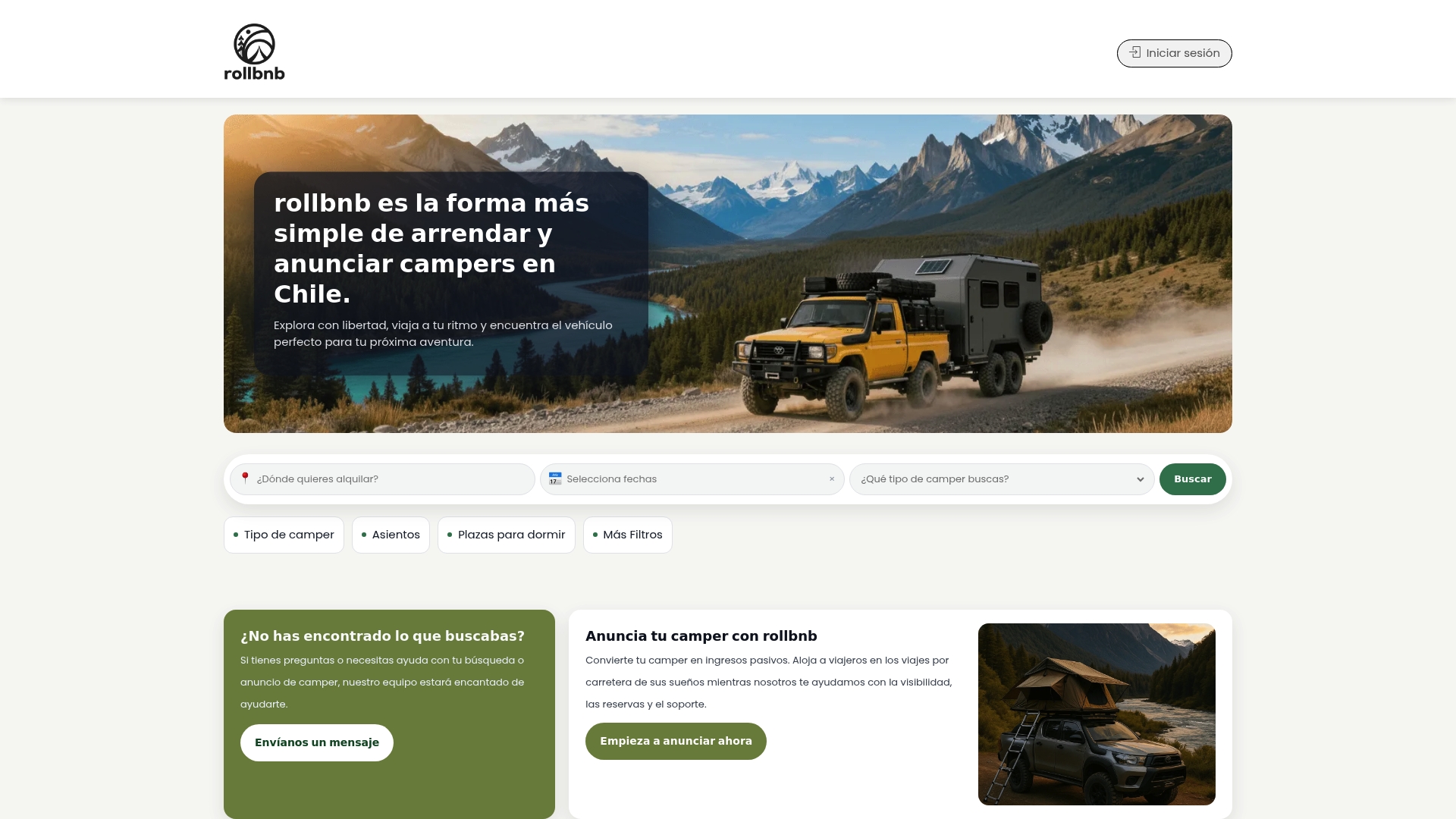
The platform offers optimized access from any mobile device, allowing you to explore camper options while planning your route or even during the trip. The platform for renting and sharing campers features a variety of vehicles with detailed information, quality photographs, and verified ratings from real users.
Rollbnb facilitates secure bookings through protected payment systems and direct communication with owners. Whether you’re looking for a Rollbnb camper rental for a weekend on the coast or an extended expedition through Patagonia, integrated technology simplifies every step of the process. Discover how the combination of technological innovation and passion for adventure can transform your next camper experience in Chile.
Frequently Asked Questions
How does technology affect the experience of booking campers in remote areas of Chile?
Technology allows access to detailed information and bookings even before reaching remote areas through apps with offline functionality. Tools like Maps.me and iOverlander provide downloadable maps and community-verified camping data, working without cellular connection. This transforms planning and navigation in areas like the Carretera Austral or the Atacama Desert, where coverage is limited. Travelers gain autonomy and safety by having critical information permanently available, allowing them to explore camper route ideas in Chile with greater confidence.
What advantages does the integration of artificial intelligence offer in camper booking platforms?
AI streamlines responses to frequent inquiries through 24/7 chatbots, eliminating waiting times and accelerating booking decisions. Smart systems manage real-time availability, reducing errors and overbooking that frustrate both travelers and owners. Additionally, personalization based on previous preferences recommends specific options that fit individual needs, saving valuable search time. These advantages are especially relevant when exploring how to rent a campervan in Chile, where the variety of options can be overwhelming without intelligent assistance.
How do privacy regulations influence the use of camper booking platforms?
Regulations require platforms to protect personal data through robust technical measures and obtain explicit consent before collecting information. Users have the right to access, modify, or delete their data, and companies must notify security breaches within specific deadlines. Non-compliance can result in severe financial penalties according to GDPR and loss of trust that affects business viability. For travelers, this means greater control over personal information and legitimate expectations that platforms handle data responsibly, creating a safer and more transparent ecosystem.
Why are offline functionalities important in apps for camper travelers?
Offline functionalities are critical because much of Chile’s territory lacks reliable cellular coverage, especially on scenic routes and in national parks. Without downloadable maps and data, travelers are vulnerable to disorientation and potentially dangerous situations in isolated areas. Offline apps provide functional GPS navigation, locations of essential services, and community-marked points of interest, all accessible without a connection. This capability transforms smartphones into indispensable survival and planning tools, allowing exploration with freedom while maintaining safety and the ability to make informed decisions about routes and campsites.