
RV Travel Guide in Chile 2026
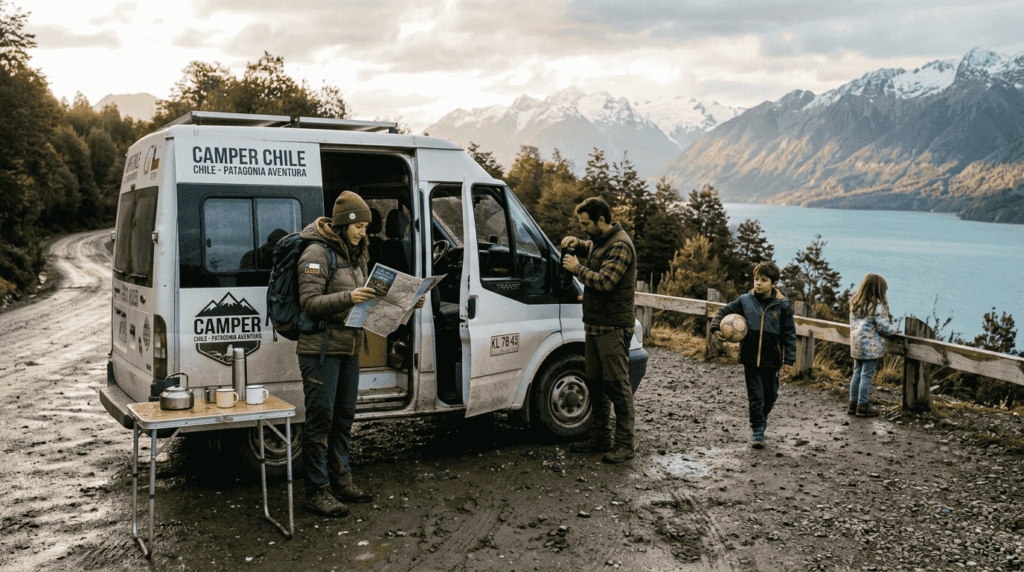
Traveling by RV through Chile is a unique experience that allows adventurers to explore incredible landscapes with complete freedom. However, demanding routes like the Carretera Austral and strict regulations in protected areas require careful planning. This guide provides practical steps, from choosing your vehicle to camping rules, ensuring you enjoy every moment without setbacks. Get ready to discover how to transform your trip into an unforgettable adventure with essential information and proven tips.
Table of Contents
- Key points for RV travel in Chile
- Essential preparations for your RV trip
- How to plan your route and logistics in Chile
- Practical tips for camping and moving with an RV in natural environments
- What to expect and how to solve common problems on RV trips in Chile
- Discover the best portal for RV rentals in Chile
- Frequently Asked Questions
Key points for RV travel in Chile
| Point | Details |
|---|---|
| Vehicle Choice | Select RVs with good ground clearance and robust suspension for routes like the Carretera Austral. |
| Route Planning | Book ferries and campsites 2-3 months in advance to avoid delays during high season. |
| Camping Regulations | Respect the total fire ban in protected areas to protect the environment. |
| Camping Network | Chile offers a variety of campsites, from full-service to rustic areas in unique landscapes. |
| Mechanical Checks | Perform pre-trip checks of brakes, suspension, and tires to minimize risks in remote areas. |
Essential preparations for your RV trip
After understanding the importance of preparation, we detail the key preparations to ensure a smooth trip. The correct vehicle choice determines the success of your adventure.
Selecting an appropriate RV is crucial. Vehicles should have good ground clearance and tires in excellent condition to handle gravel and uneven terrain. Suspension and mechanical control are critical, especially for routes like the Carretera Austral. Before departing, schedule a complete mechanical check including brakes, steering, suspension, and the cooling system.
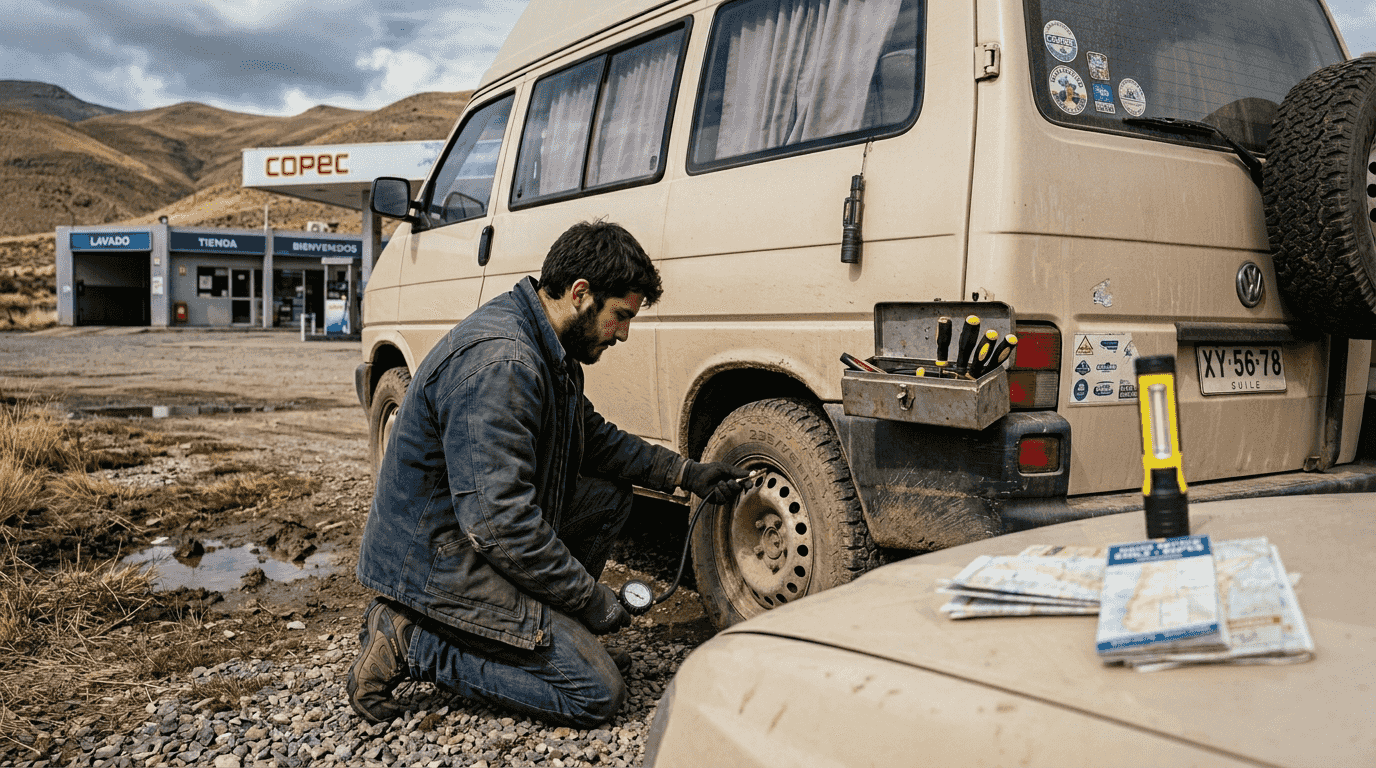
Documentation must be up-to-date and complete. Verify that your driver’s license is valid, your insurance covers remote areas, and you have the necessary permits for your route. If you plan to cross into Argentina, ensure you have the corresponding customs documentation.
Booking ferries in advance is crucial to avoid long waits. During high season (December to March), spots fill up quickly, and delays can last several days. Plan 2-3 months ahead to secure your passage.
Equipment should consider varied climates:
- Clothing for temperatures from 5°C to 25°C depending on the area
- Basic tool kit and spare parts (tire, fuses, belts)
- Provisions of water and non-perishable food for 3-4 days
- Portable cooking equipment and utensils
- Complete first aid kit with personal medications
Pro tip: Pack extra potable water containers. In remote southern areas, campsites may have untreated water, and you’ll need reserves for cooking and drinking.
Familiarize yourself with how to rent a campervan in Chile to understand options and compare models before deciding.
How to plan your route and logistics in Chile
After preparing the RV and documentation, the focus now shifts to detailed route planning and daily logistics to make the most of your trip. Time is your ally when used strategically.
Defining the appropriate duration avoids unnecessary stress. For the complete Carretera Austral, 14-20 days are recommended, including breaks to enjoy viewpoints, glaciers, and towns. A one-way trip requires a minimum of 7-10 days. Shortening the times too much turns the experience into an exhausting race.
Advance booking of campsites is essential, especially in national parks like Torres del Paine or Conguillío. During January and February, many campsites reach maximum capacity. Contact at least 30 days in advance or consider private alternatives.
Considering road conditions transforms your planning:
- Identify gravel sections and calculate average speeds of 40-50 km/h
- Check route conditions on official websites before each stage
- Plan stops every 2-3 hours for rest and vehicle checks
- Consider ferry schedules and add 1-2 hours for waiting times
- Calculate fuel consumption, which increases by 20-30% on uneven terrain
Checking forecasts is vital in mountainous areas. Patagonian weather changes rapidly, and what starts clear in the morning can turn into a storm by noon. Check local forecasts each morning and be flexible to adjust plans.
The following table compares estimated times for popular routes:
| Route | Distance | Minimum Time | Recommended Days |
|---|---|---|---|
| Santiago – Puerto Varas | 1,020 km | 2 days | 3-4 days |
| Puerto Montt – Coyhaique | 1,240 km | 4 days | 7-8 days |
| Coyhaique – Villa O’Higgins | 572 km | 3 days | 5-6 days |
| Andean Lakes Route | 450 km | 2 days | 4-5 days |
Preparing alternatives saves you from frustration. Identify backup campsites, secondary routes, and supply points. If a ferry is canceled due to bad weather, having a Plan B prevents losing valuable days.
Explore the campervan travel blog for inspiration with real routes and tips from other travelers.
Practical tips for camping and moving with an RV in natural environments
With the route planned, this section provides best practices for caring for nature and respecting regulations during camping and travel. Protecting the environment is not optional; it’s your responsibility.
Complying with the fire ban is essential. 99% of forest fires in Chile are human-caused. In national parks and protected areas, lighting campfires, barbecues, cigarettes, or any source of fire is strictly prohibited. Fines exceed $50 million pesos and can include prison sentences.
Using registered campsites guarantees basic services and regulatory compliance. Authorized campsites have:
- Bathrooms and showers with water treatment systems
- Separate waste disposal points
- Designated areas for recreational vehicles
- Emergency-trained staff
- Clear coexistence regulations
Being alert to weather conditions saves lives. In mountainous areas, thunderstorms are frequent and dangerous. Seek shelter in solid structures, never under isolated trees. During strong winds exceeding 60 km/h, avoid driving and secure all external elements of your RV.
Pro tip: Download offline weather apps before entering areas without signal. Windy and Meteoblue offer detailed wind, rain, and temperature maps that work without internet.
Keeping the environment clean is mandatory and civic. Abandoned trash contaminates soil and water, in addition to attracting dangerous animals. Carry sturdy bags to separate waste and transport it to authorized disposal points. Leaving trash can result in fines from $300,000 to $2,000,000 pesos.
“Leave nothing but footprints, take nothing but pictures, kill nothing but time.”
Asking park rangers for information opens opportunities. They know less-traveled routes, recent wildlife sightings, and updated trail conditions. Respecting signs and regulations protects fragile ecosystems and your safety.
Consider the camper rental platform that connects with owners committed to responsible practices.
What to expect and how to solve common problems on RV trips in Chile
Knowing the rules and precautions, this section helps manage frequent problems and make informed decisions for a positive experience. Anticipating challenges reduces frustrations.
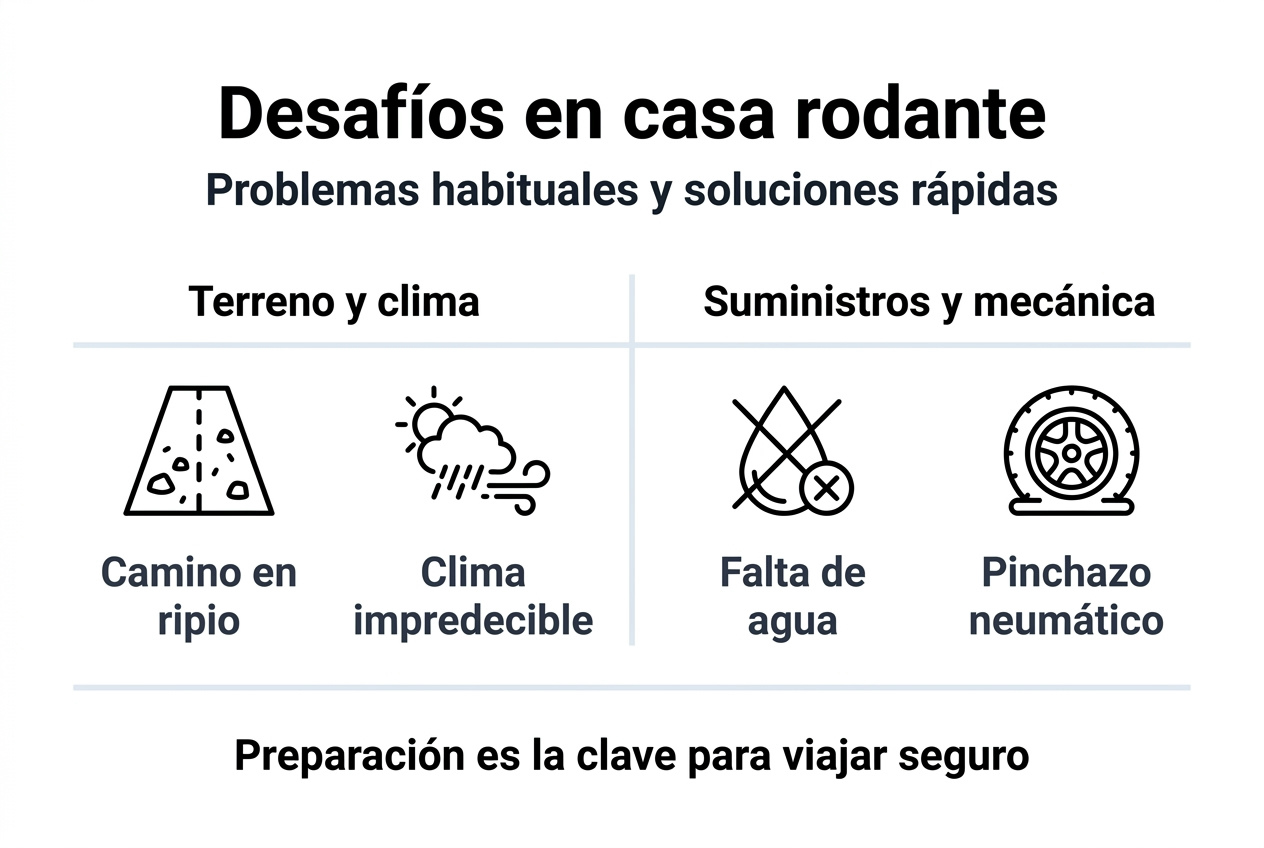
Being prepared for terrain variations is realistic. 60% of travelers face delays due to road conditions or fuel problems. Gravel sections deteriorate suspension and increase consumption. Allow 30-40% more time than on paved roads.
Comparing RV models optimizes your choice based on real needs:
| Feature | Compact Campervan | Medium RV | Large Motorhome |
|---|---|---|---|
| Capacity | 2-3 people | 4-5 people | 6-8 people |
| Fuel Consumption | 10-12 L/100km | 15-18 L/100km | 20-25 L/100km |
| Maneuverability | Excellent on narrow roads | Good on main roads | Limited on gravel |
| Daily Cost | $45,000-$65,000 | $80,000-$120,000 | $150,000-$200,000 |
Having a mechanical emergency kit is essential:
- Hydraulic jack and lug wrench with extension
- Jumper cables and powerful flashlight
- Duct tape, wire, and clamps
- Extra engine oil and coolant
- Contacts for roadside mechanics (write them down before losing signal)
Reacting correctly to common problems makes a difference. If you get a flat tire on gravel, move completely off the road before changing it. Place warning signs 50 meters in both directions. In case of severe bad weather, wait in a safe place; never force driving with visibility less than 30 meters.
Lack of water is critical in arid northern areas. Carry a minimum of 40 liters of reserve and ration use to extend autonomy. Ask at service stations about safe refilling points.
Flexibility and patience transform obstacles into adventures. A delayed ferry becomes an opportunity to explore a coastal town. Heavy rain allows for rest and better planning of subsequent stages. Rigid travelers suffer; flexible ones enjoy.
Pro tip: Join RV traveler Facebook groups. They share real-time alerts on road conditions, ferries, and campsite recommendations.
Review campervan rental costs to budget your adventure correctly.
Discover the best portal for RV rentals in Chile
Now that you’re prepared thanks to the guide, this section shows you how to easily get the ideal RV for your adventure. Rollbnb connects travelers with verified owners throughout Chile.
Rollbnb is the leading campervan sharing portal in Chile and South America. The platform offers a variety of models, from compact campervans to family motorhomes, adapting to the needs of small groups or entire families.
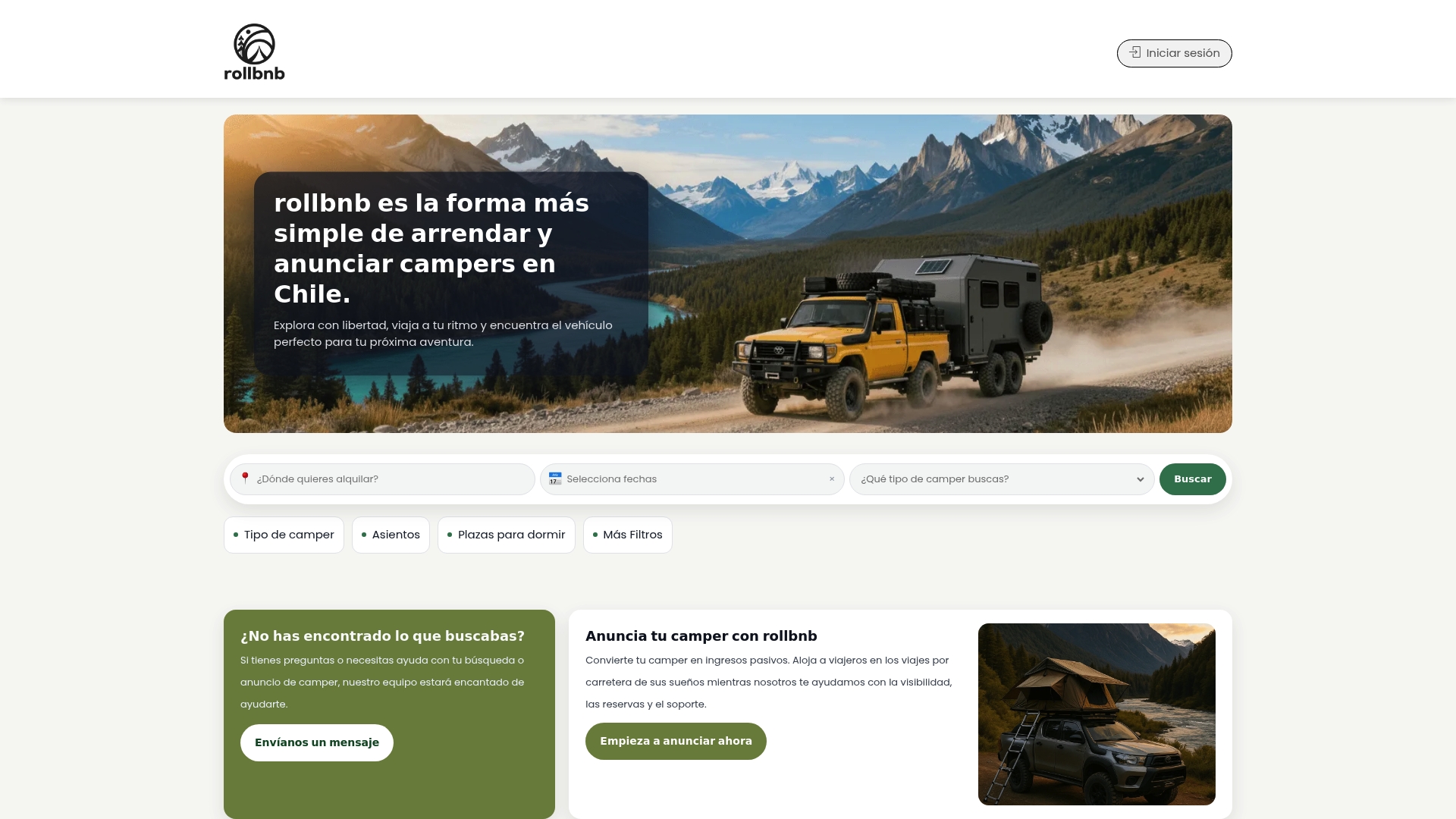
Booking is easy, secure, and reliable. Each owner undergoes identity verification, and vehicles include detailed photographs, technical specifications, and reviews from previous users. The direct messaging system allows you to resolve doubts before confirming.
Explore the list of campers in Chile and find everything from economical options to premium vehicles with full equipment. If you’re looking for something specific, check the RV rental section with filters by location, price, and features.
Starting your adventure has never been simpler. Join the community of adventurers who already trust Rollbnb to explore Patagonia, Atacama, and all corners of Chile.
Frequently Asked Questions
What should I consider when choosing an RV for traveling through Chile?
Choose vehicles with good ground clearance, a minimum of 18-20 cm, and all-terrain tires for Chilean gravel roads. Consider the interior space based on your group size, ensuring all passengers have seatbelts. Check water tank capacity (minimum 80 liters) and battery autonomy for areas without electricity.
How much time should I plan for a trip along the Carretera Austral in an RV?
A complete round trip requires 14-20 days, considering stops at glaciers, towns, and viewpoints. For a one-way trip, plan a minimum of 7-10 days. Breaks are essential to enjoy the landscapes, rest from constant gravel driving, and avoid fatigue that compromises safety.
What rules should I follow when camping in national parks and protected areas?
Strictly comply with the fire ban, which includes campfires, barbecues, and cigarettes in all protected areas. Dispose of waste only in authorized containers, separating organic from recyclable materials. Always consult park rangers about specific area restrictions and respect marked trails without cutting through vegetation.
Is it necessary to book ferries in advance?
Yes, especially during the high season from December to March. Main ferries like Hornopirén-Caleta Gonzalo and Puelche-Puerto Yungay fill up quickly. Book 60-90 days in advance to secure a spot. Arrive 1 hour before the scheduled time for check-in and be aware that weather delays are common.
What should I do if I have a mechanical emergency in a remote area?
Stay calm and assess if it’s safe to continue. If the problem is serious (brake loss, steering), do not move the vehicle. Contact your roadside assistance insurance if you have signal. In areas without coverage, place warning signs and wait for help from other drivers. Most travelers stop to assist. Always carry numbers for mechanics in major cities written down on paper.